
Outdoor Living Space Built to Last
Patio installation in Peru, Kokomo or Logansport, IN for properties lacking functional outdoor living areas
Reeser Lawn Care installs patios for property owners who want usable, well-constructed outdoor spaces that hold up over time without shifting, cracking, or settling unevenly. A patio that fails structurally typically does so because the base preparation was inadequate from the start — not because of the surface material itself. Recognizing that distinction is where sound patio work begins.
The process typically starts with an assessment of the intended area: the grade of the ground, how water currently moves across the site, and what the subsurface looks like once excavation begins. From there, the approach involves proper base compaction, edge restraint placement, and surface material installation in a sequence that prevents future movement. Reeser Lawn Care works through each of these stages methodically rather than skipping to the finish surface, because shortcuts at the base layer are what cause pavers to rock and concrete to crack within a few years.
Request a property walkthrough in Peru, Kokomo or Logansport, IN to discuss layout options and site-specific preparation requirements for your outdoor space.
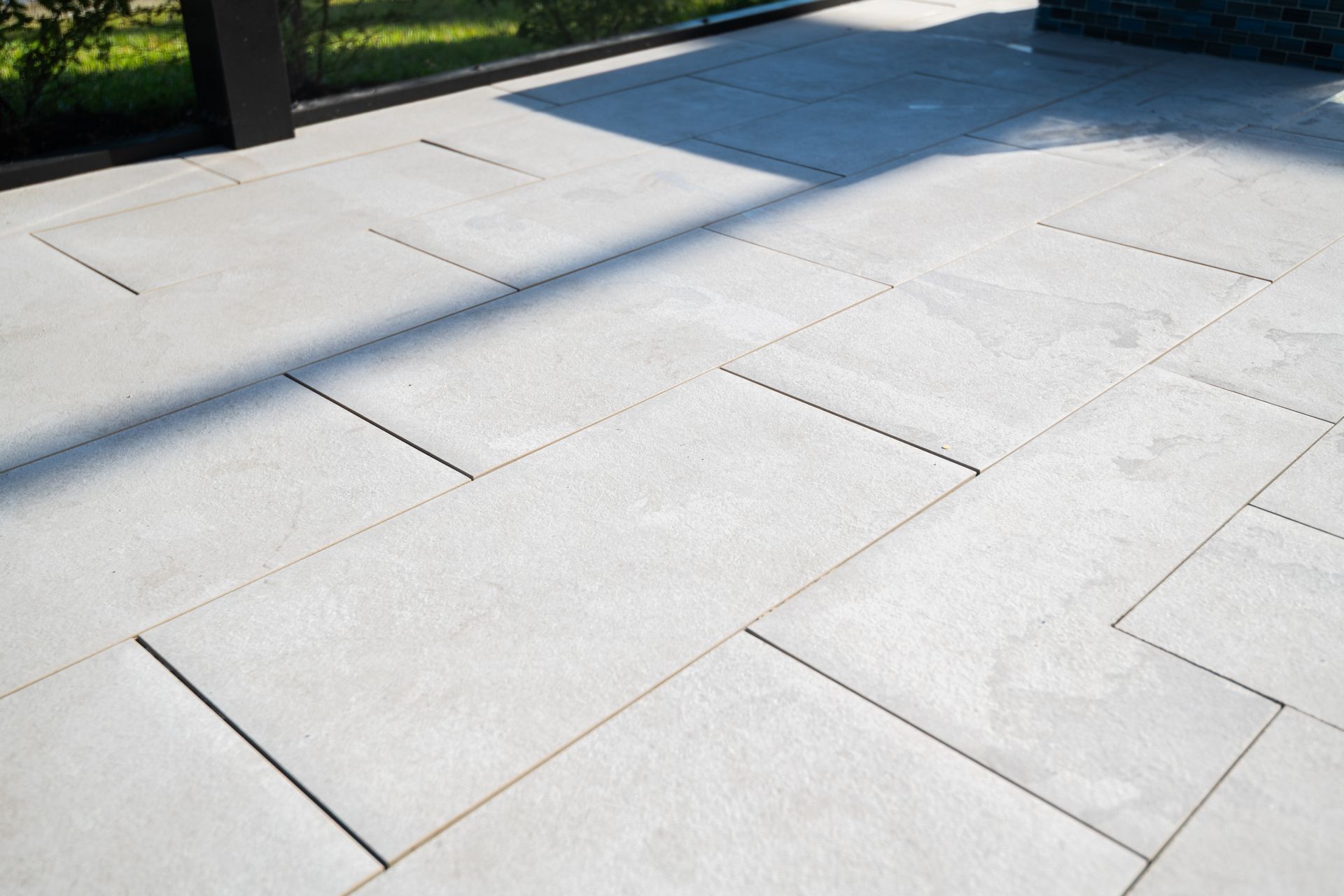
What Proper Patio Installation Requires
A correctly built patio depends on base depth and compaction more than it depends on the surface material chosen. In most residential installations, the excavated base is filled with compactable aggregate — typically crushed limestone or a similar graded stone — and compacted in lifts rather than all at once, because single-layer compaction leaves voids that compress unevenly under load. The surface layer, whether concrete pavers, natural stone, or poured concrete, is only as stable as what sits beneath it.
Once installation is complete, you will notice that the surface sits flush and level without visible rocking between units, that edges are contained cleanly without gaps, and that water drains away from the structure rather than pooling at the center or along the house foundation. These are the observable signs of a correctly prepared and installed patio rather than one that was laid directly on disturbed or poorly graded soil.
The approach also involves decisions about slope: a finished patio surface should carry a slight grade away from any adjacent structure to prevent water from migrating toward a foundation. This pitch is typically subtle enough to be invisible but consequential enough that omitting it creates long-term drainage problems along the building's perimeter.
Common Questions About Patio Installation
The following questions address how patio work is actually performed and what property owners should understand before and during the process.
What happens during the ground preparation phase before any surface material is placed?
The installation area is excavated to a depth that accommodates both the base aggregate layer and the surface material thickness, then the exposed subgrade is compacted before any fill is added — skipping this initial compaction step is one of the most common causes of paver settlement within the first two years.
How is the correct base depth determined for a patio installation?
Base depth depends on the surface material weight, the expected load on the finished patio, and the stability of the existing subgrade once excavated — a concrete paver patio typically requires a deeper compacted aggregate base than a poured slab of equivalent thickness.
What should you look for in a finished patio surface to confirm the work was done correctly?
Each paver or slab unit should sit without rocking when walked on, joints should be consistent in width, and the surface should visibly slope away from the house at a low but measurable grade rather than appearing perfectly flat.
Why do patio edges matter and how are they handled during installation?
Edge restraints — typically spiked plastic or aluminum border pieces — are set along the perimeter before the surface layer is placed to prevent lateral creep, which is what causes the outer units of an unrestrained patio to spread apart and leave gaps over time.
How does the condition of an existing yard surface affect the patio installation process?
Areas with filled or previously disturbed soil require additional compaction passes or deeper base material because loosely consolidated fill compresses unpredictably under load, meaning the installation sequence and material quantities are adjusted based on what the excavation reveals.
Reeser Lawn Care can assess your specific site conditions and walk through material and layout options suited to your property. Schedule a consultation in Peru, Kokomo or Logansport, IN to review what the ground preparation and installation process will involve for your outdoor space.